read-word-动词不规则变化
本文最后更新于:2023年3月25日 下午 13:02:52
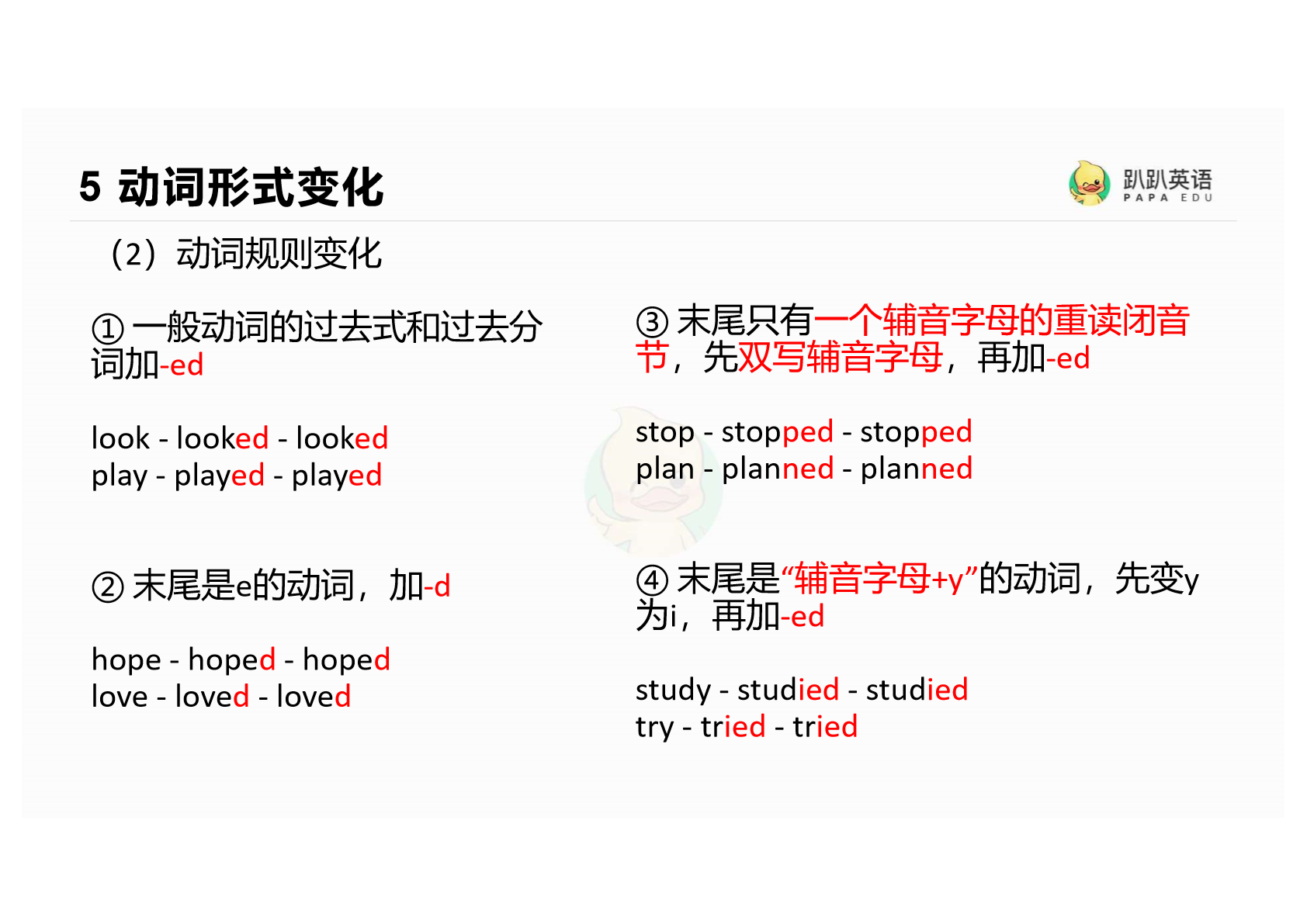
双写的常见整理
stop, plan
stop
| 单词 | 时态 | 英式音标 | 造句 | 造句翻译 |
|---|---|---|---|---|
| stop | 原型 | /stɒp/ | I need to stop eating junk food. | 我需要停止吃垃圾食品。 |
| stopped | 过去式 | /stɒpt/ | I stopped the car at the red light. | 我在红灯处停了车。 |
| stopped | 过去分词 | /stɒpt/ | The music suddenly stopped playing. | 音乐突然停止了播放。 |
plan
| 单词 | 时态 | 英式音标 | 造句 | 造句翻译 |
|---|---|---|---|---|
| plan | 原型 | /plæn/ | We need to plan our trip before we leave. | 我们需要在出发之前计划我们的旅行。 |
| planned 英 /plænd/ |
过去式 | /plænd/ | She planned to finish her work early today. | 她计划今天早些时候完成她的工作。 |
| planned | 过去分词 | /plænd/ | The party was already planned before I joined the team. | 这个聚会在我加入团队之前就已经计划好了。 |
辅音字母+y 结尾
注意:必须是辅音字母+y
eg:play 结尾是 a + y ,a 是元音字母,所以是 played-played
| 单词 | 时态 | 英式音标 | 造句 | 造句翻译 |
|---|---|---|---|---|
| play | 原型 | /pleɪ/ | I like to play basketball with my friends. | 我喜欢和我的朋友们打篮球。 |
| played | 过去式 | /pleɪd/ | She played the piano beautifully last night. | 她昨晚演奏钢琴演奏得非常美妙。 |
| played | 过去分词 | /pleɪd/ | The children have already played outside today. | 孩子们今天已经在外面玩了。 |
常用动词
be
| 单词 | 时态 | 造句 | 造句翻译 |
|---|---|---|---|
| be | 原型 | I am a student. | 我是一名学生。 |
| was/were | 过去式 | He was a great singer in his youth. | 他年轻时是一名出色的歌手。 |
| been | 过去分词 | I have been to New York twice. | 我去过两次纽约。 |
go
| 单词 | 时态 | 造句 | 造句翻译 |
|---|---|---|---|
| go | 原型 | We go to the park every weekend. | 我们每个周末都去公园。 |
| went | 过去式 | She went to the store to buy some milk. | 她去商店买牛奶了。 |
| gone | 过去分词 | The movie has gone viral on social media. | 这部电影在社交媒体上已经走红了。 |
do
| 单词 | 时态 | 造句 | 造句翻译 |
|---|---|---|---|
| do | 原型 | I do my homework every day after school. | 放学后我每天都做作业。 |
| did | 过去式 | He did a great job on the project. | 他在这个项目上干得很好。 |
| done | 过去分词 | The laundry is done and ready to be put away. | 衣服洗好了,可以收起来了。 |
————————-
have
| 单词 | 时态 | 造句 | 造句翻译 |
|---|---|---|---|
| have | 原型 | I have a headache. | 我头疼。 |
| had | 过去式 | She had a lot of fun at the party. | 她在聚会上玩得很开心。 |
| had | 过去分词 | He has had too much to drink. | 他喝太多了。 |
make
| 单词 | 时态 | 造句 | 造句翻译 |
|---|---|---|---|
| make | 原型 | I can make dinner tonight. | 我今晚可以做晚饭。 |
| made | 过去式 | She made a cake for her friend’s birthday. | 她为朋友的生日做了一个蛋糕。 |
| made | 过去分词 | The bed is made and the room looks clean. | 床被整理好了,房间看起来很干净。 |
get
| 单词 | 时态 | 造句 | 造句翻译 |
|---|---|---|---|
| get | 原型 | I get up at 6am every morning. | 我每天早上 6 点起床。 |
| got | 过去式 | He got a new job last week. | 上周他找到了一份新工作。 |
| got | 过去分词 | I have got a headache. | 我头疼。 |
-t
备注:过去式和过去分词 属于直接在原词 上面加 -t
deal
| 单词 | 时态 | 造句 | 造句翻译 |
|---|---|---|---|
| deal | 原型 | We made a deal to meet at the cafe. | 我们达成了在咖啡店见面的协议。 |
| dealt 英 /delt/ |
过去式 | He dealt with the problem quickly. | 他迅速解决了问题。 |
| dealt | 过去分词 | The cards have been dealt. | 牌已经发好了。 |
mean
| 单词 | 时态 | 造句 | 造句翻译 |
|---|---|---|---|
| mean | 原型 | What does that word mean? | 那个词是什么意思? |
| meant 英 /ment/ |
过去式 | The gift meant a lot to her. | 这份礼物对她来说意义重大。 |
| meant | 过去分词 | The message was meant for you. | 这个消息是给你的。 |
————————-
备注:过去式和过去分词 属于原词结尾d变成t的
lend
| 单词 | 时态 | 英式音标 | 造句 | 造句翻译 |
|---|---|---|---|---|
| lend | 原型 | 英 /lend/ | Can you lend me your pen, please? | 你能借给我你的笔吗? |
| lent | 过去式 | 英 /lent/ | He lent me his car for the weekend. | 他借给我他的车过周末。 |
| lent | 过去分词 | 英 /lent/ | I have lent him money several times before. | 我以前借给他几次钱。 |
build
| 单词 | 时态 | 造句 | 造句翻译 |
|---|---|---|---|
| build | 原型 | They are planning to build a new house. | 他们打算建一座新房子。 |
| built | 过去式 | The Eiffel Tower was built in 1889. | 埃菲尔铁塔建于 1889 年。 |
| built | 过去分词 | The team has built a strong relationship. | 这个团队建立了牢固的关系。 |
spend
| 单词 | 时态 | 造句 | 造句翻译 |
|---|---|---|---|
| spend | 原型 | I usually spend my weekends at home. | 我通常在家度过周末。 |
| spent | 过去式 | She spent all her money on the concert. | 她把所有的钱都花在了音乐会上。 |
| spent | 过去分词 | The company has spent a lot of money on R&D | 公司已经在研发上投入了大量的资金。 |
————————-
备注:过去式和过去分词 属于原词去e ,然后加 -t的, 其中 -eep 变成了 -ept ,-se 变成了 -st
sleep
| 单词 | 时态 | 造句 | 造句翻译 |
|---|---|---|---|
| sleep | 原型 | I need to sleep for eight hours. | 我需要睡八小时。 |
| slept 英 /slept/ |
过去式 | She slept soundly through the night. | 她整夜都睡得很香。 |
| slept | 过去分词 | I have slept too much today. | 我今天睡得太多了。 |
keep
| 单词 | 时态 | 造句 | 造句翻译 |
|---|---|---|---|
| keep | 原型 | I like to keep my room clean. | 我喜欢保持我的房间干净。 |
| kept | 过去式 | She kept the secret to herself. | 她把秘密独自保存了下来。 |
| kept 英 /kept/ |
过去分词 | The flowers have been kept in water | 这些花一直放在水中。 |
lose
| 单词 | 时态 | 造句 | 造句翻译 |
|---|---|---|---|
| lose 英 /luːz/ |
原型 | I don’t want to lose my keys again. | 我不想再丢了我的钥匙。 |
| lost 英 /lɒst/ |
过去式 | He lost his wallet on the way home. | 他在回家的路上丢了钱包。 |
| lost | 过去分词 | The game was lost due to a technical error. | 由于技术故障,比赛输掉了。 |
————————-
leave
备注:过去式和过去分词 属于ave变成f,然后加 -t的
| 单词 | 时态 | 造句 | 造句翻译 |
|---|---|---|---|
| leave | 原型 | They will leave for the airport soon. | 他们马上就要去机场了。 |
| left | 过去式 | I left my phone at home. | 我把手机落在家里了。 |
| left | 过去分词 | The party is over and everyone has left. | 派对结束了,大家都离开了。 |
-d
hear
备注:过去式和过去分词 属于直接加 -d
| 单词 | 时态 | 造句 | 造句翻译 | 最常见意思 |
|---|---|---|---|---|
| hear 英 /hɪə/ 读音:同 here |
原型 | I can hear the music from my room. | 我可以听到从我的房间里传来的音乐。 | 听到、听说、听取 |
| heard 英 /hə:d/ 读音:her:英 /hɜː(r)/ |
过去式 | She heard the news from her friend. | 她从朋友那里听到了这个消息。 | 听到、听说、听取 |
| heard | 过去分词 | I’ve heard good things about this restaurant. | 我听说这家餐厅很不错。 | 听到、听说、听取 |
flee - 逃跑、逃离
备注:过去式和过去分词 属于ee去掉一个e,然后加 -d
| 单词 | 时态 | 造句 | 造句翻译 |
|---|---|---|---|
| flee 英 /fliː/ |
原型 | The criminal fled from the scene of the crime. | 罪犯从犯罪现场逃走了。 |
| fled 英 /fled/ |
过去式 | The bird fled its nest after being disturbed. | 这只鸟因被打扰而逃离了它的巢。 |
| fled | 过去分词 | The suspect had fled the country before the trial. | 嫌疑犯在审判前逃离了这个国家。 |
————————-
备注:过去式和过去分词 属于变y为i,然后加 -d
say
| 单词 | 时态 | 造句 | 造句翻译 | 最常见意思 |
|---|---|---|---|---|
| say 英 /seɪ/ eg:may |
原型 | He didn’t say anything when I asked him. | 当我问他的时候,他没说什么。 | 说、讲、表达 |
| said 英 /sed/ |
过去式 | She said she would be here by 9pm. | 她说她会在晚上 9 点之前到达这里。 | 说、讲、表达 |
| said | 过去分词 | The book has said everything that needs to be said. | 这本书已经说了需要说的一切。 | 说、讲、表达 |
pay - 支付、付款
| 单词 | 时态 | 造句 | 造句翻译 |
|---|---|---|---|
| pay 英 /peɪ/ |
原型 | Can I pay with my credit card? | 我可以用信用卡付款吗? |
| paid 英 /peɪd/ |
过去式 | I paid $10 for this book. | 我为这本书付了 10 美元。 |
| paid | 过去分词 | The invoice has not been paid yet. | 这张发票还没有付款。 |
————————-
备注:过去式和过去分词 属于变ell为old的。
tell - 告诉、讲述
| 单词 | 时态 | 造句 | 造句翻译 |
|---|---|---|---|
| tell 英 /tel/ |
原型 | Please tell me your name. | 请告诉我你的名字。 |
| told 英 /təʊld/ eg:told, sold |
过去式 | He told me a funny joke. | 他给我讲了一个有趣的笑话。 |
| told | 过去分词 | She has never been told about the change. | 她从未被告知这个变化。 |
sell
| 单词 | 时态 | 造句 | 造句翻译 | 最常见意思 |
|---|---|---|---|---|
| sell 英 /sel/ |
原型 | They sell fresh fruits and vegetables there. | 那里卖新鲜的水果和蔬菜。 | 卖出、出售 |
| sold 英 /səʊld/ eg:told, sold |
过去式 | He sold his car last week. | 上个星期他卖了他的车。 | 卖出、出售 |
| sold | 过去分词 | All the tickets for the concert have been sold out. | 这场音乐会的所有门票都已经售罄。 | 卖出、出售 |
vowel shifts
注意:除了两个A-B-C的唱(sing)和喝(drink),其余都是 过去式和过去分词保持一致
sit - 坐
备注:过去式和过去分词 属于元音变成了a的
| 单词 | 时态 | 造句 | 造句翻译 |
|---|---|---|---|
| sit | 原型 | Please sit down and make yourself comfortable. | 请坐下并使自己感到舒适。 |
| sat 英 /sæt/ |
过去式 | I sat on the bench and watched the sunset. | 我坐在长椅上看日落。 |
| sat | 过去分词 | The cat has sat on the windowsill all morning. | 这只猫整个上午都坐在窗台上。 |
hold - 获取、得到
备注:过去式和过去分词 属于元音变成了e的
| 单词 | 时态 | 英式音标 | 造句 | 造句翻译 |
|---|---|---|---|---|
| hold | 原型 | /həʊld/ | Please hold the door for me. | 请为我把门握住。 |
| held | 过去式 | /held/ | He held the baby in his arms all night. | 他整晚都抱着婴儿。 |
| held | 过去分词 | /held/ | The concert had already been held when we arrived. | 我们到达时,音乐会已经结束了。 |
备注:下面给属于 过去式和过去分词 属于元音变成了o的
get - 获取、得到
| 单词 | 时态 | 造句 | 造句翻译 |
|---|---|---|---|
| get | 原型 | I need to get a new phone. | 我需要买一部新手机。 |
| got 英 /ɡɒt/ |
过去式 | She got a promotion at work. | 她在工作中获得了晋升。 |
| got | 过去分词 | Have you ever got lost in a foreign country? | 你曾经在外国迷路过吗? |
win - 赢得
| 单词 | 时态 | 英式音标 | 造句 | 造句翻译 |
|---|---|---|---|---|
| win | 原型 | 英 /wɪn/ | She always tries her best to win every competition. | 她总是尽最大努力赢得每场比赛。 |
| won | 过去式 | 英 /wʌn/ | Our team won the championship last year. | 我们的队去年赢得了冠军。 |
| won | 过去分词 | 英 /wʌn/ | He has won several awards for his work in the film industry. | 他在电影界的工作获得了几项奖励。 |
meet - 遇见
备注:过去式和过去分词 属于元音从ee 发/i/,变成了e 发/e/的
| 单词 | 时态 | 英式音标 | 造句 | 造句翻译 |
|---|---|---|---|---|
| meet | 原型 | /miːt/ | Let’s meet for lunch tomorrow at noon. | 明天中午我们一起去吃午餐吧。 |
| met | 过去式 | /met/ | I met my best friend at the park yesterday. | 我昨天在公园里遇到了我最好的朋友。 |
| met | 过去分词 | /met/ | The deadline had already been met when I submitted it. | 我提交时,截止日期已经到了。 |
————————-
备注:下面几个的过去式和过去分词 属于不规则变形成 发其他元音的字母组合的
find - 找到、寻找
解析:元音 i 发/aɪ/,变成了 ou 发/aʊ/ eg:house 英 /haʊs/
| 单词 | 时态 | 造句 | 造句翻译 |
|---|---|---|---|
| find 英 /faɪnd/ |
原型 | Can you help me find my keys? | 你能帮我找一下我的钥匙吗? |
| found 英 /faʊnd/ |
过去式 | I found a great book at the library yesterday. | 昨天我在图书馆找到了一本好书。 |
| found | 过去分词 | The missing dog was finally found by its owner. | 这只失踪的狗最终被它的主人找到了。 |
stand - 站立
解析:元音 a 发/æ/,变成了 oo 发/ʊ/, 并且把单词n给去掉了。
| 单词 | 时态 | 造句 | 造句翻译 |
|---|---|---|---|
| stand 英 /stænd/ |
原型 | She asked him to stand up and leave the room. | 她要求他站起来离开房间。 |
| stood 英 /stʊd/ |
过去式 | The soldier stood at attention during the parade. | 这个士兵在游行期间保持着立正。 |
| stood | 过去分词 | The old building had stood for over a century. | 这座古老的建筑已经立了一个多世纪了。 |
2 个 A(i)-B(a)-C(u)
口诀:游泳 唱歌 喝酒; drink, sing, drink
swim - 游泳
| 单词 | 时态 | 英式音标 | 造句 | 造句翻译 |
|---|---|---|---|---|
| swim | 原型 | /swɪm/ | I love to swim in the ocean during the summer. | 我喜欢在夏天在海洋中游泳。 |
| swam | 过去式 | /swæm/ | She swam across the lake yesterday. | 她昨天游过了湖泊。 |
| swum | 过去分词 | /swʌm/ | The race had already been swum before the storm arrived. | 暴风雨到来之前,比赛已经结束了。 |
sing - 唱歌
| 单词 | 时态 | 造句 | 造句翻译 |
|---|---|---|---|
| sing 英 /sɪŋ/ |
原型 | She loves to sing in the shower. | 她喜欢在淋浴时唱歌。 |
| sang 英 /sæŋ/ |
过去式 | He sang his favorite song at the concert. | 他在音乐会上唱了他最喜欢的歌曲。 |
| sung 英 /sʌŋ/ |
过去分词 | The national anthem was sung by the whole crowd. | 全体观众一起唱起了国歌。 |
drink - 喝
| 单词 | 时态 | 造句 | 造句翻译 |
|---|---|---|---|
| drink 英 /drɪŋk/ |
原型 | I usually drink coffee in the morning. | 我通常早上喝咖啡。 |
| drank 英 /dræŋk/ |
过去式 | He drank a glass of water after the meal. | 他饭后喝了一杯水。 |
| drunk 英 /drʌŋk/ |
过去分词 | The wine had been drunk by someone else. | 这瓶酒已被其他人喝过了。 |
2 个 A(o/u)-B(a)-A(o/u)
come - 来
| 单词 | 时态 | 造句 | 造句翻译 |
|---|---|---|---|
| come | 原型 | Please come to my house for dinner. | 请来我家吃晚饭。 |
| came 英 /keɪm/ |
过去式 | The train came to a stop at the station. | 火车在车站停下来了。 |
| come | 过去分词 | The decision had come as a surprise. | 这个决定令人意外。 |
run - 跑步
| 单词 | 时态 | 造句 | 造句翻译 |
|---|---|---|---|
| run 英 /rʌn/ |
原型 | I like to run in the morning. | 我喜欢早上跑步。 |
| ran 英 /ræn/ |
过去式 | He ran a marathon last year. | 他去年参加了一次马拉松。 |
| run 英 /rʌn/ |
过去分词 | I have never run that far before. | 我从来没有跑过那么远的距离。 |
-aught
记忆: 教你 抓住; teach catch
teach - 教、教导
| 单词 | 时态 | 造句 | 造句翻译 |
|---|---|---|---|
| teach | 原型 | I want to teach English in China. | 我想在中国教英语。 |
| taught 英 /tɔːt/ |
过去式 | My mother taught me how to cook. | 我妈妈教我如何做饭。 |
| taught | 过去分词 | He has been taught how to swim. | 他已经被教会游泳了。 |
catch - 抓住、捕捉
| 单词 | 时态 | 造句 | 造句翻译 |
|---|---|---|---|
| catch 英 /kætʃ/ |
原型 | Can you catch the ball? | 你能接住球吗? |
| caught 英 /kɔːt/ |
过去式 | I caught a cold last week. | 上个星期我感冒了。 |
| caught | 过去分词 | The thief was caught by the police. | 小偷被警察抓住了。 |
-ought
记忆: 购买 带来 思考; buy bring think
buy - 购买
| 单词 | 时态 | 造句 | 造句翻译 |
|---|---|---|---|
| buy 英 /bɔːt/ |
原型 | I want to buy a new phone. | 我想买一部新手机。 |
| bought 英 /bɔːt/ |
过去式 | I bought a book yesterday. | 我昨天买了一本书。 |
| bought | 过去分词 | The tickets have been bought. | 票已经被买了。 |
bring - 带来、拿来
| 单词 | 时态 | 造句 | 造句翻译 |
|---|---|---|---|
| bring 英 /brɪŋ/ |
原型 | Can you bring me a glass of water? | 你能给我拿杯水吗? |
| brought 英 /brɔːt/ |
过去式 | She brought her daughter to the park. | 她带她的女儿来了这个公园。 |
| brought | 过去分词 | The food was brought to the table. | 食物被端到桌子上了。 |
think - 思考、认为
| 单词 | 时态 | 造句 | 造句翻译 |
|---|---|---|---|
| think 英 /θɪŋk/ |
原型 | I think it’s going to rain. | 我认为天要下雨了。 |
| thought 英 /θɔːt/ |
过去式 | I thought about it and decided not to go. | 我考虑了一下,决定不去了。 |
| thought | 过去分词 | He has always been thought of as a good leader. | 他一直被认为是一个好的领袖。 |
-(e)n
注意:此处的-(e)n 指的是过去分词 结尾是 -(e)n
注意:下面的所有的 过去式和过去分词 形式均不同
过去分词在原词上加 -n
备注:下面两个的过去式 属于规则变化
show - 展示、显示
| 单词 | 时态 | 造句 | 造句翻译 |
|---|---|---|---|
| show 英 /ʃəʊ/ |
原型 | Can you show me how to do it? | 你可以给我演示一下怎么做吗? |
| showed | 过去式 | He showed us his new car yesterday. | 他昨天给我们展示了他的新车。 |
| shown 英 /ʃəʊn/ |
过去分词 | The results will be shown on the screen in a few minutes. | 结果将在几分钟内显示在屏幕上。 |
prove - 证明
| 单词 | 时态 | 造句 | 造句翻译 |
|---|---|---|---|
| prove 英 /pruːv/ |
原型 | I will prove my innocence. | 我会证明我的清白。 |
| proved | 过去式 | The experiment proved his theory. | 实验证明了他的理论。 |
| proven 英 /‘pru:vən/ |
过去分词 | His skills have been proven in previous projects. | 他的技能在之前的项目中已被证明。 |
————————-
备注:下面几个的过去式 属于元音变成了a的
give - 给予
| 单词 | 时态 | 造句 | 造句翻译 |
|---|---|---|---|
| give 英 /gɪv/ |
原型 | He gave me a book. | 他给了我一本书。 |
| gave 英 /ɡeɪv/ 读音:a_e 读/eɪ/ |
过去式 | She gave a speech at the conference last week. | 上周她在会议上发表了演讲。 |
| given 英 /ˈɡɪvn/ |
过去分词 | The teacher has given us a lot of homework. | 这位老师给了我们很多作业。 |
forgive - 原谅、宽恕
| 单词 | 时态 | 造句 | 造句翻译 |
|---|---|---|---|
| forgive 英 /fəˈɡɪv/ |
原型 | I hope you can find it in your heart to forgive me. | 我希望你能原谅我。 |
| forgave 英 /fə’ɡeɪv/ |
过去式 | He forgave her for the mistake she had made. | 他原谅了她所犯的错误。 |
| forgiven 英 /fə’givn/ |
过去分词 | The debt has been forgiven by the creditor. | 债务已被债权人宽恕。 |
————————-
备注:下面几个的过去式 属于元音变成了e的。口诀:知道 画画 成长;know, draw, grow
know - 知道、了解
| 单词 | 时态 | 造句 | 造句翻译 |
|---|---|---|---|
| know 英 /nəʊ/ |
原型 | I don’t know what to do. | 我不知道该怎么做。 |
| knew 英 /njuː/ 读音:k+new |
过去式 | She knew the answer to the question. | 她知道这个问题的答案。 |
| known 英 /nəʊn/ |
过去分词 | These cells are known as endodermal cells. | 这些细胞称为内胚层细胞。 |
draw - 画、绘制
| 单词 | 时态 | 造句 | 造句翻译 |
|---|---|---|---|
| draw 英 /drɔː/ |
原型 | She likes to draw pictures. | 她喜欢画画。 |
| drew 英 /druː/ eg: Jew 英 /dʒu:/ grew 英 /ɡruː/ drew 英 /druː/ |
过去式 | He drew a map of the area. | 他画了一张地图。 |
| drawn 英 /drɔːn/ |
过去分词 | The curtains were drawn to keep out the sunlight. | 窗帘被拉上以阻挡阳光。 |
grow - 生长、成长
| 单词 | 时态 | 造句 | 造句翻译 |
|---|---|---|---|
| grow 英 /ɡrəʊ/ |
原型 | The plants grow quickly in this soil. | 这种土壤中的植物生长迅速。 |
| grew 英 /ɡruː/ eg: Jew 英 /dʒu:/ grew 英 /ɡruː/ drew |
过去式 | He grew taller as he got older. | 随着年龄的增长,他变得更高了。 |
| grown 英 /ɡrəʊn/ |
过去分词 | The company has grown significantly in recent years. | 这家公司在近年来已经显著增长。 |
————————-
备注:下面几个的过去式 属于元音变成了o的
drive - 驾驶
| 单词 | 时态 | 造句 | 造句翻译 |
|---|---|---|---|
| drive 英 /draɪv/ |
原型 | He drives a sports car. | 他开跑车。 |
| drove 英 /drəʊv/ 读音:o_e 读/əʊ/ |
过去式 | She drove to the beach last weekend. | 上个周末她开车去了海滩。 |
| driven 英 /‘drɪvn/ |
过去分词 | The car has been driven for 100,000 miles. | 这辆车已经行驶了 10 万英里。 |
rise - 上升
| 单词 | 时态 | 英式音标 | 造句 | 造句翻译 |
|---|---|---|---|---|
| rise | 原型 | /raɪz/ | The sun will rise in the east tomorrow. | 明天太阳将从东方升起。 |
| rose | 过去式 | /rəʊz/ | The moon rose over the horizon last night. | 昨晚月亮从地平线上升起。 |
| risen | 过去分词 | /ˈrɪzən/ | The sun had already risen when I woke up this morning. | 当我早上醒来时,太阳已经升起了。 |
————————-
备注:下面几个的过去式,完全变了样式的
take - 拿走
| 单词 | 时态 | 造句 | 造句翻译 |
|---|---|---|---|
| take 英 /teɪk/ |
原型 | Can I take a look at your book? | 我可以看一下你的书吗? |
| took 英 /tʊk/ 读音:oo 读/ʊ/ |
过去式 | She took the pen from the table. | 她从桌子上拿起了笔。 |
| taken 英 /‘teɪkn/ |
过去分词 | The package has been taken to the post office. | 包裹已被送到邮局。 |
see - 看到、看见
| 单词 | 时态 | 造句 | 造句翻译 |
|---|---|---|---|
| see 英 /siː/ |
原型 | I can see the mountains in the distance. | 我能看到远处的山。 |
| saw 英 /sɔː/ eg:law |
过去式 | She saw a movie last night. | 她昨晚看了一场电影。 |
| seen 英 /siːn/ eg: bee |
过去分词 | He has never seen such a beautiful sunset before. | 他从未看到过如此美丽的日落。 |
过去分词 在原词上加 -en
fall - 落下、跌倒
备注:过去式 属于元音变成了e的
| 单词 | 时态 | 造句 | 造句翻译 |
|---|---|---|---|
| fall 英 /fɔːl/ eg:all 英 /ɔːl/ |
原型 | The leaves will fall from the trees in autumn. | 秋天树叶会从树上落下。 |
| fell 英 /fel/ eg:bell |
过去式 | He fell off his bike and broke his arm. | 他从自行车上摔下来,摔断了手臂。 |
| fallen 英 /‘fɔːl(ə)n/ |
过去分词 | The vase had fallen off the shelf and shattered. | 那个花瓶从架子上掉了下来,摔碎了。 |
eat 吃
备注:下面的过去式,是把单词完全打乱。
| 单词 | 时态 | 造句 | 造句翻译 |
|---|---|---|---|
| eat 英 /iːt/ |
原型 | I eat breakfast every morning. | 我每天早上吃早餐。 |
| ate 英 /et/ 注意:a 发 小口/e/ |
过去式 | She ate a sandwich for lunch. | 她午餐吃了一个三明治。 |
| eaten | 过去分词 | The pizza had been eaten before I arrived. | 披萨在我到达之前已经被吃掉了。 |
过去分词 在原词上双写 t 加 -n
注意:过去分词最终结尾都是en,因为原词 结尾是e
write - 写
备注:下面的过去式 属于元音变成了o的
| 单词 | 时态 | 造句 | 造句翻译 |
|---|---|---|---|
| write 英 /raɪt/ 读音:i_e 读/aɪ/ |
原型 | Can you write your name for me? | 你能为我写下你的名字吗? |
| wrote 英 /rəʊt/ 读音:o_e 读/əʊ/ |
过去式 | She wrote a letter to her friend yesterday. | 她昨天给她的朋友写了一封信。 |
| written 英 /‘rɪtn/ |
过去分词 | The novel was written by a famous author. | 这本小说是由一位著名的作家写的。 |
bite - 咬
| 单词 | 时态 | 造句 | 造句翻译 |
|---|---|---|---|
| bite 英 /baɪt/ 读音:i_e 读/aɪ/ |
原型 | The dog will not bite if you don’t provoke it. | 如果你不惹它,这只狗不会咬人。 |
| bit 英 /bɪt/ |
过去式 | I accidentally bit my tongue. | 我不小心咬到了我的舌头。 |
| bitten 英 /‘bɪtn/ 注意:双写 t |
过去分词 | He was bitten by a snake in the jungle. | 他在丛林里被蛇咬了。 |
过去分词 在过去式特殊变形 上加 -n
注意:最终结尾都是en,因为过去式特殊变形 结尾是e
speak - 说话
| 单词 | 时态 | 造句 | 造句翻译 |
|---|---|---|---|
| speak | 原型 | He doesn’t speak French very well. | 他的法语说得不太好。 |
| spoke 英 /spəʊk/ 读音:o_e 读/əʊ/ |
过去式 | She spoke to the manager about the problem. | 她跟经理谈了谈问题。 |
| spoken 英 /‘spəʊk(ə)n/ |
过去分词 | The speech had been spoken before we arrived. | 演讲在我们到达之前已经被发表了。 |
choose - 选择
| 单词 | 时态 | 造句 | 造句翻译 |
|---|---|---|---|
| choose 英 /tʃuːz/ 读音:oo 读/ʊ/ |
原型 | You can choose any item from the menu. | 你可以从菜单中选择任何项目。 |
| chose 英 /tʃəʊz/ 读音:o_e 读/əʊ/ |
过去式 | I chose a book to read before bed. | 我选择了一本睡前读的书。 |
| chosen 英 /‘tʃəʊzn/ |
过去分词 | She has already chosen her wedding dress. | 她已经选择了她的婚纱。 |
break - 打破
| 单词 | 时态 | 造句 | 造句翻译 |
|---|---|---|---|
| break 英 /breɪk/ |
原型 | I don’t want to break the vase. | 我不想打破花瓶。 |
| broke 英 /brəʊk/ 读音:o_e 读/əʊ/ |
过去式 | He broke his leg while skiing. | 他在滑雪时摔断了腿。 |
| broken 英 /‘brəʊk(ə)n/ |
过去分词 | The vase was broken into tiny pieces. | 花瓶被打碎成了碎片。 |
过去分词 在过去式特殊变形 上双写 t 加 -en
forget - 忘记
| 单词 | 时态 | 造句 | 造句翻译 |
|---|---|---|---|
| forget 英 /fə’get/ |
原型 | I always forget my password. | 我总是忘记我的密码。 |
| forgot 英 /fə’ɡɒt/ |
过去式 | I forgot my phone at home. | 我把手机忘在家里了。 |
| forgotten 英 /fə’ɡɒtn/ 注意:双写 t |
过去分词 | The deadline had been forgotten by the team. | 截止日期已经被团队遗忘了。 |
不变的
set - 放置、设置
| 单词 | 时态 | 造句 | 造句翻译 |
|---|---|---|---|
| set | 原型 | Please set the table for dinner. | 请摆好餐桌准备吃饭。 |
| set | 过去式 | I set my alarm clock for 7am. | 我把闹钟设置在早上 7 点。 |
| set | 过去分词 | The sun has already set for the day. | 今天的太阳已经下山了。 |
| setting | 现在分词 | They are currently setting up the equipment. | 他们正在搭建设备。 |
put - 放置
| 单词 | 时态 | 造句 | 造句翻译 |
|---|---|---|---|
| put | 原型 | Can you put these books on the shelf? | 你能把这些书放在书架上吗? |
| put | 过去式 | I put my phone on the desk and went to bed. | 我把手机放在桌子上,然后去睡觉了。 |
| put | 过去分词 | The package was put on the doorstep. | 包裹被放在门口。 |
| putting | 现在分词 | She is putting on makeup for the party tonight. | 她正在为今晚的聚会化妆。 |
cut - 切、割
| 单词 | 时态 | 造句 | 造句翻译 |
|---|---|---|---|
| cut | 原型 | She cut the cake into six equal pieces. | 她把蛋糕切成了六个相等的部分。 |
| cut | 过去式 | He cut his finger with a knife. | 他用刀子割伤了手指。 |
| cut | 过去分词 | The lawn has been cut and looks neat and tidy. | 草坪已经割过了,看上去整洁干净。 |
| cutting | 现在分词 | She is cutting up vegetables for the salad. | 她正在切蔬菜准备沙拉。 |
read
| 单词 | 时态 | 英式音标 | 造句 | 造句翻译 |
|---|---|---|---|---|
| read | 原型 | 英 /riːd/ | I love to read books in my free time. | 我喜欢在空闲时间看书。 |
| read | 过去式 | 英 /red/ | She read the whole novel in just one day. | 她在一天内读完了整本小说。 |
| read | 过去分词 | 英 /red/ | Have you ever read anything by Shakespeare? | 你有没有读过莎士比亚的作品? |
shut - 关闭
| 单词 | 时态 | 造句 | 造句翻译 |
|---|---|---|---|
| shut | 原型 | Please shut the door when you leave. | 请在离开时关上门。 |
| shut | 过去式 | She shut her laptop after finishing the work. | 她完成工作后关上了她的笔记本电脑。 |
| shut | 过去分词 | The store is now shut for the night. | 这家店现在已经关门了。 |
| shutting | 现在分词 | He is shutting down his computer. | 他正在关闭他的电脑。 |
cost - 花费
| 单词 | 时态 | 造句 | 造句翻译 |
|---|---|---|---|
| cost | 原型 | The dress costs too much money. | 这件裙子太贵了。 |
| cost | 过去式 | The concert tickets cost $50 each. | 音乐会门票每张花费 50 美元。 |
| cost | 过去分词 | The damaged car has cost me a lot of money to repair. | 维修这辆损坏的汽车花费了我很多钱。 |
| costing | 现在分词 | The project is still ongoing and is currently costing $1 million a month. | 这个项目仍在进行中,目前每个月的成本为 100 万美元。 |
cast - 投、掷
| 单词 | 时态 | 造句 | 造句翻译 |
|---|---|---|---|
| cast | 原型 | He cast his fishing line into the river. | 他把鱼线投入了河中。 |
| cast | 过去式 | She cast her vote in the election. | 她在选举中投了票。 |
| cast | 过去分词 | The movie stars were cast by the director. | 电影中的演员是由导演选定的。 |
hurt - 伤害、使受伤
| 单词 | 时态 | 造句 | 造句翻译 |
|---|---|---|---|
| hurt | 原型 | I hurt my back lifting that heavy box. | 我在搬那个重箱子的时候伤到了背。 |
| hurt | 过去式 | She hurt her ankle while playing tennis. | 她在打网球时扭伤了脚踝。 |
| hurt | 过去分词 | The accident victims were badly hurt. | 那个事故的受害者们伤势严重。 |
bet - 打赌
| 单词 | 时态 | 造句 | 造句翻译 |
|---|---|---|---|
| bet | 原型 | I bet you can’t guess what I got you. | 我打赌你猜不到我给你买了什么。 |
| bet | 过去式 | He bet on the wrong horse and lost money. | 他打错了马匹,输掉了钱。 |
| bet | 过去分词 | I have never bet on a sports game before. | 我以前从未在比赛中打过赌。 |
| betting | 现在分词 | They are always betting on football games. | 他们总是在足球比赛中打赌。 |
hit - 打
| 单词 | 时态 | 造句 | 造句翻译 |
|---|---|---|---|
| hit | 原型 | She hit the ball out of the park. | 她把球打出了球场。 |
| hit | 过去式 | He hit his head on the low doorway. | 他的头撞到了低矮的门框上。 |
| hit | 过去分词 | The car was hit by a truck and totaled. | 这辆车被一辆卡车撞毁了。 |
| hitting | 现在分词 | The boxer is hitting his opponent with quick jabs. | 这名拳击手 |
其他
Lie 的几种用法:
| 用法 | 示例 |
|---|---|
| 躺 | Lie down on the bed. (躺在床上。) |
| 位于 | The park lies on the east side of the city. (公园位于城市的东边。) |
| 撒谎 | She lied to her boss about being sick. (她向老板撒谎说自己病了。) |
| 误导,骗 | The evidence showed that he had lied to the police. (证据表明他曾经对警察撒谎。) |
lie:躺/位于
| 单词 | 时态 | 音标 | 造句 | 造句翻译 |
|---|---|---|---|---|
| lie | 原型 | laɪ | The cat likes to lie in the sun. | 这只猫喜欢躺在阳光下。 |
| lay | 过去式 | leɪ | I lay on the couch and watched TV. | 我躺在沙发上看电视。 |
| lain | 过去分词 | leɪn | The book had lain untouched for years. | 这本书多年未被碰过。 |
"lain" 是 "lie" 的过去分词形式,表示 "躺" 的意思。例如,"The book had lain untouched for years" 意为 "这本书多年未被碰过,一直躺在那里没有动过"。
lay:放置/下蛋
| 单词 | 时态 | 音标 | 造句 | 造句翻译 |
|---|---|---|---|---|
| lay | 原型 | leɪ | I will lay the book on the table. | 我会把书放在桌子上。 |
| laid | 过去式 | leɪd | She laid the baby in the crib. | 她把婴儿放在了婴儿床里。 |
| laid | 过去分词 | leɪd | The eggs had been laid by the hen. | 这些蛋是母鸡下的。 |
其中,"lay" 可以表示 "放置" 或者 "下蛋" 的意思。例如,"She laid the baby in the crib." 表示 "她把婴儿放在了婴儿床里。","The eggs had been laid by the hen." 表示 "这些蛋是母鸡下的。"
lie 撒谎
| 单词 | 时态 | 英式音标 | 造句 | 造句翻译 |
|---|---|---|---|---|
| lie | 原型 | laɪ | I don’t like it when people lie. | 我不喜欢别人说谎。 |
| lied | 过去式 | laɪd | She lied to me about her age. | 她在年龄上对我撒谎。 |
| lied | 过去分词 | laɪd | He has lied to his boss before. | 他以前曾经对他的老板撒谎。 |